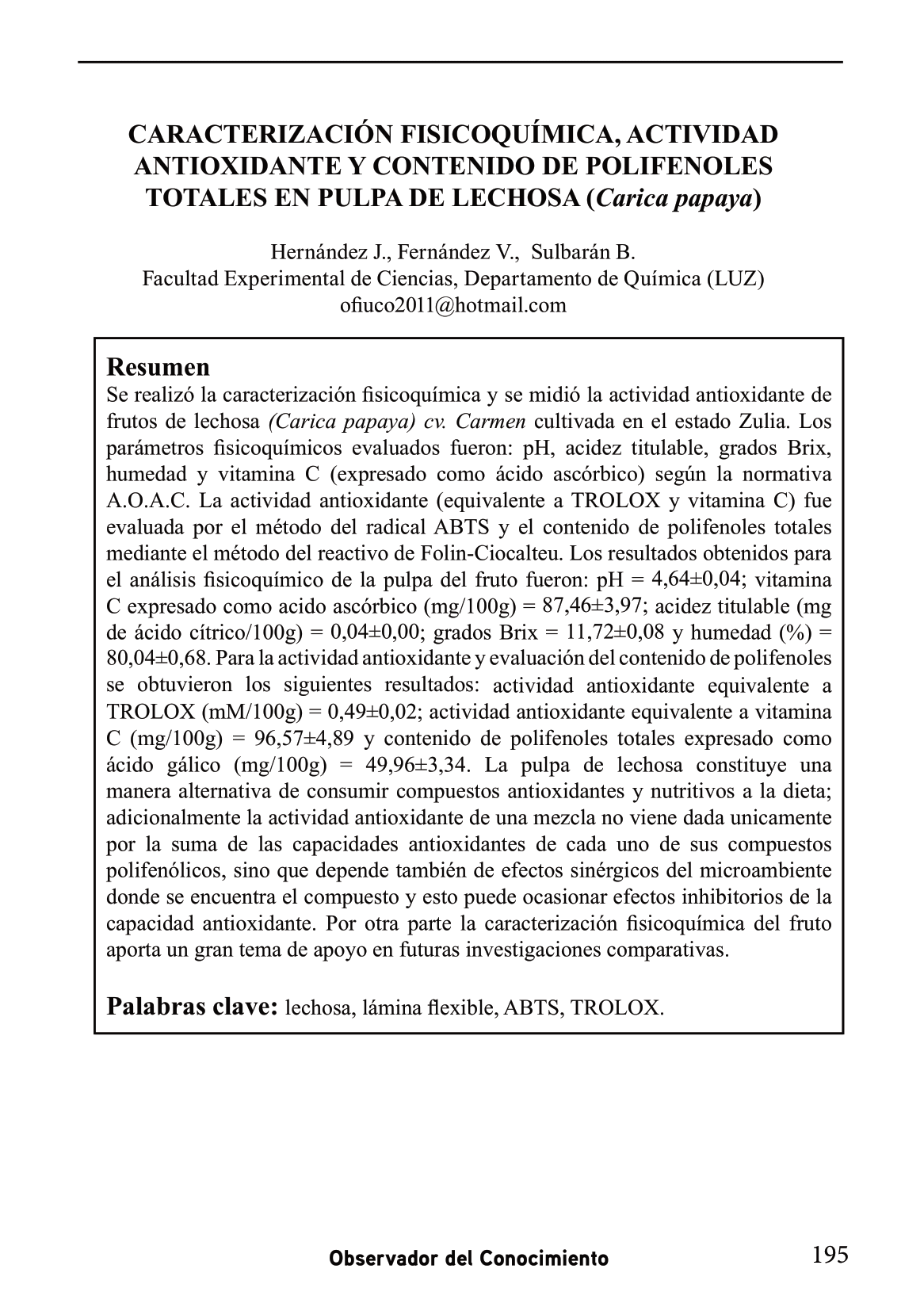
Physicochemical characterization, antioxidant activity and total polyphenol content in papaya pulp (Carica papaya)
Keywords:
milky, flexible sheet, ABTS, TROLOXAbstract
The physicochemical characterization and antioxidant activity of papaya (Carica papaya) cv. Carmen fruit cultivated in the state of Zulia were performed. The physicochemical parameters evaluated were: pH, titratable acidity, Brix degrees, moisture, and vitamin C (expressed as ascorbic acid) according to A.O.A.C. standards. Antioxidant activity (equivalent to TROLOX and vitamin C) was evaluated by the ABTS radical method, and total polyphenol content was determined using the Folin-Ciocalteu reagent method. The results obtained for the physicochemical analysis of the fruit pulp were: pH = 4.64 ± 0.04; vitamin C expressed as ascorbic acid (mg/100g) = 87.46 ± 3.97; titratable acidity (mg of citric acid/100g) = 0.04 ± 0.00; Brix degrees = 11.72±0.08 and moisture (%) = 80.04±0.68. For the antioxidant activity and evaluation of the polyphenol content, the following results were obtained: antioxidant activity equivalent to TROLOX (mM/100g) = 0.49±0.02; antioxidant activity equivalent to vitamin C (mg/100g) = 96.57±4.89 and total polyphenol content expressed as gallic acid (mg/100g) = 49.96±3.34. Papaya pulp constitutes an alternative way to consume antioxidant and nutritive compounds in the diet; additionally, the antioxidant activity of a mixture is not given solely by the sum of the antioxidant capacities of each of its polyphenolic compounds, but also depends on synergistic effects of the microenvironment where the compound is found, and this can cause inhibitory effects on the antioxidant capacity. Furthermore, the physicochemical characterization of the fruit provides a great basis for future comparative research.